
For construction subcontractors, managing VAT alongside Construction Industry Scheme (CIS) deductions and contractor payments can be challenging. The VAT Reverse Charge adds another layer of complexity, particularly when businesses need to determine who is responsible for accounting for VAT and how transactions should be reported.
Introduced on 1 March 2021, the domestic VAT Reverse Charge requires customers, rather than suppliers, to account for VAT on qualifying construction services. The rules are designed to prevent VAT fraud in the construction industry.
At Artifin Accountants, we supported a construction subcontractor operating in the telecommunications infrastructure sector who needed clarity on how the Reverse Charge applied to its services. With contractor payments involving CIS deductions and retentions, it was important to establish the correct VAT treatment and ensure the transactions were accurately reflected in the company’s accounting records.
Key Takeaways
- Your £12,570 Personal Allowance normally applies to your main job, not both.
- Second jobs commonly use BR (20%), D0 (40%), or D1 (45%) tax codes.
- Income Tax considers your combined earnings, while National Insurance generally applies separately to each employment.
- Incorrect tax codes can cause overpayments or unexpected tax bills.
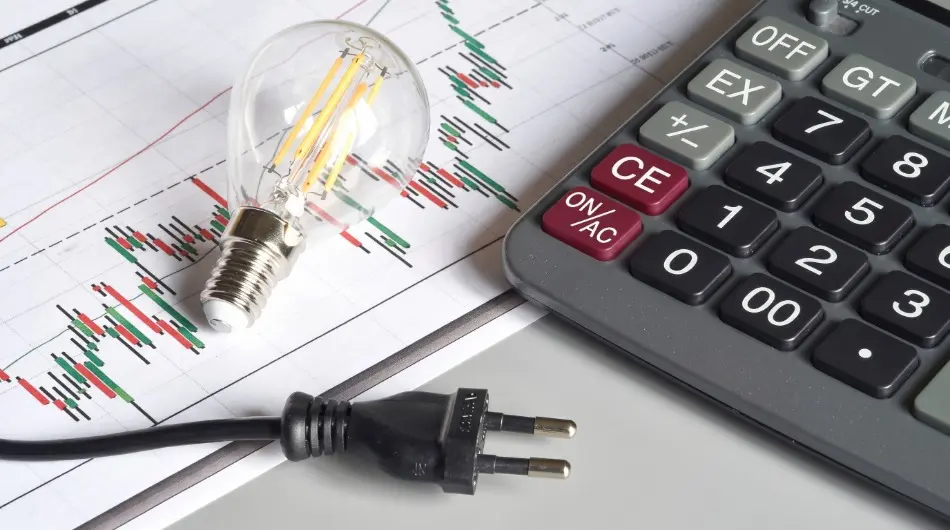
Electricity VAT has been cut to 0%. So why are some UK businesses still paying 20%?
The government’s latest electricity tax change sounds like welcome relief for anyone struggling with rising energy bills. From 1 October 2026, qualifying electricity supplies in Great Britain benefit from a temporary 0% VAT rate. But there’s a catch: the reduction isn’t limited strictly to households, and not every business qualifies.
Could your business be entitled to the lower rate without realising it? Here’s what the electricity VAT cut actually changes, who benefits and what it could mean for your next electricity bill.
What Has Changed Under the Electricity VAT Cut?
Prime Minister Andy Burnham’s government announced the electricity VAT cut in July 2026, reducing VAT on qualifying electricity supplies from 5% to 0%. The change took effect on 1 October 2026 and will remain in place until 31 March 2027, unless further legislation changes the position.
The relief covers qualifying electricity supplies in England, Scotland and Wales, including certain non-domestic supplies that previously benefited from the reduced 5% VAT rate.
Domestic gas remains subject to 5% VAT, while Northern Ireland is not covered by the temporary electricity zero rate.
Here’s how the VAT rates compare:
|
Energy Supply |
Before 1 October 2026 |
From 1 October 2026 |
|
Qualifying electricity in Great Britain |
5% |
0% |
|
Domestic gas across the UK |
5% |
5% |
|
Qualifying electricity in Northern Ireland |
5% |
5% |
|
Non-qualifying commercial electricity |
20% |
20% |
Source: Temporary zero rate of VAT for domestic electricity in Great Britain
Will the Electricity VAT Cut Actually Reduce Your Energy Bills?
The government estimates that the electricity VAT cut will reduce the annual Ofgem energy price cap by around £45 compared with what it would otherwise have been. However, that doesn’t mean every household will receive a £45 reduction over the six months.
The actual benefit depends on electricity consumption and the charges set by suppliers. For example, electricity costing £100 before VAT would previously have resulted in a £105 bill. At 0% VAT, the same electricity charges would total £100.
Most households don’t need to take any action to receive the reduction, as suppliers are expected to apply it automatically. The change also covers qualifying customers on fixed tariffs and prepayment meters.
But there’s something worth watching: lower VAT doesn’t guarantee a lower overall bill. Other energy costs can rise, potentially offsetting the savings.
According to Ofgem’s October 2026 price cap announcement, the VAT reduction has been reflected in the latest electricity price cap figures, although other energy costs continue to affect household bills.
Why Are Some Businesses Still Paying 20% VAT on Electricity?
Commercial electricity is generally subject to 20% VAT, but HMRC has long recognised exceptions for certain qualifying supplies. The new electricity VAT cut means that qualifying electricity supplied in Great Britain can now benefit from 0% VAT during the temporary relief period.
One exception is particularly relevant to smaller businesses. Under HMRC’s rules, electricity supplied in sufficiently small quantities can be treated as domestic use for VAT purposes, even when the customer operates from commercial premises.
A supply may qualify under the small-quantity rules where electricity consumption does not exceed:
• 33 kWh per day, on average
• 1,000 kWh per month, on average
Consider a small office using around 800 kWh of electricity per month. Depending on how the supply is assessed under HMRC’s rules, it may qualify for the temporary 0% VAT rate despite being commercial premises. A larger office using substantially more electricity would generally remain subject to 20%, unless it qualifies through another provision.
Other qualifying uses may include:
• Charitable activities: Electricity used by charities for qualifying non-business purposes.
• Residential accommodation: Electricity supplied for certain qualifying residential uses, including care homes.
• Mixed-use premises: Supplies where electricity is used partly for qualifying purposes, subject to HMRC’s apportionment rules.
Where at least 60% of a supply is for qualifying use, the whole supply may qualify. If the qualifying proportion is lower, the VAT treatment may need to be allocated.
The rules are not based simply on whether a premises is labelled residential or commercial. What matters is the nature of the supply and whether it satisfies the relevant conditions.
Source: HMRC VAT Notice 701/19 – Fuel and Power
Could Your Business Be Paying the Wrong Electricity VAT Rate?
If your business has relatively low electricity consumption but is still being charged 20% VAT, reviewing your invoices could be worthwhile. That does not automatically mean the supplier has made an error, but it gives you a reason to check whether the supply meets HMRC’s qualifying-use rules.
The review is particularly important for businesses that are not VAT registered or cannot fully recover input VAT. For them, incorrectly charged VAT may represent a real additional cost. VAT-registered businesses should also check that their bookkeeping reflects the correct tax treatment.
Before paying your next electricity bill, consider these checks:
• Review your consumption: Does your electricity supply fall within HMRC’s small-quantity limits?
• Check the VAT rate: Is your supplier charging 20%, 5% or 0%, and does that match your circumstances?
• Confirm qualifying use: Could your premises qualify under the residential, charitable or mixed-use provisions?
• Review your VAT records: Are electricity expenses being recorded correctly in your accounts?
If the rate appears incorrect, contact your electricity supplier and ask them to review the charge. Where necessary, they may need to issue a corrected invoice. Businesses should not simply reclaim VAT that was incorrectly charged, as this may create problems with their VAT returns.
Understanding how electricity expenses should be treated is part of maintaining accurate VAT records. Our VAT services can help businesses review their VAT position and ensure the correct treatment is applied.
Is the Electricity VAT Cut Permanent?
The electricity VAT cut is currently a temporary measure, applying to qualifying supplies in Great Britain from 1 October 2026 until 31 March 2027. Unless the government extends the relief through further legislation, those supplies will generally return to the previous 5% rate from April 2027.
Businesses that qualify should therefore review their electricity charges during the relief period and pay attention to invoices covering dates on either side of the change. The applicable VAT treatment can depend on the relevant tax-point rules, so the date shown on an invoice should not be considered in isolation.
The temporary nature of the measure also makes it important to avoid assuming that electricity expenses will remain zero-rated in future accounting periods.
Source: The Value Added Tax (Supplies of Domestic Electricity) Order 2026
Before You Pay Your Next Electricity Bill, Check the VAT
The electricity VAT cut could benefit more than households, and some smaller businesses may qualify without realising it. Checking the VAT rate on your electricity invoice against HMRC’s qualifying-use rules is a practical way to determine whether the correct amount is being charged.
If your business is still paying 20% VAT despite relatively low electricity consumption, it may be worth reviewing the position before your next bill or VAT return.
At Artifin Accountants, we help UK businesses understand their VAT obligations and review the tax treatment of business expenses. Our team can help you assess whether the temporary electricity VAT reduction applies to your circumstances.
Speak to Our VAT Experts to review your business’s electricity VAT treatment.
Frequently Asked Question
Is VAT on electricity 0% across the UK?
Does the electricity VAT cut apply to Northern Ireland?
Will electricity suppliers automatically apply the new VAT rate?
Can businesses still reclaim VAT on electricity bills?
Will the electricity VAT return to 5% in April 2027?
Still Paying 20% VAT on Business Electricity?
Not every business has to. Check whether HMRC’s qualifying-use rules apply to your supply.