

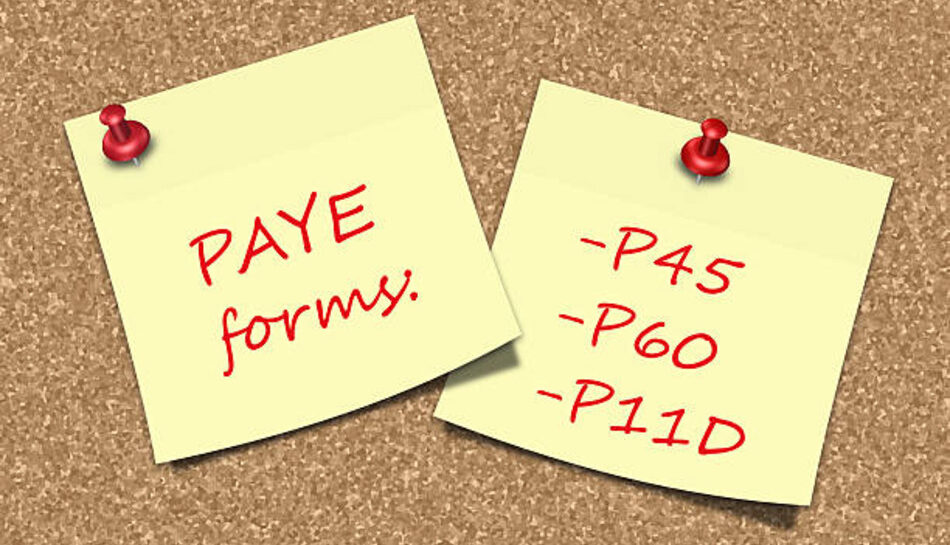
In the UK, payroll management involves more than just timely employee payments. It involves completing the necessary paperwork, maintaining HMRC compliance, and ensuring that employees receive accurate taxes all year long. Payroll documents P11D, P45, and P60 are among the most commonly misunderstood.
These forms affect how tax is calculated, how benefits are reported, and how income history is recorded. Understanding how these forms interact is crucial, whether you are an employee attempting to comprehend your tax documents or an employer managing payroll. Errors can lead to incorrect tax codes, unexpected tax bills, or penalties from HMRC.
This guide explains what P11D, P45, and P60 forms are, when they are issued, and why they matter for payroll. It also highlights how professional payroll support can reduce compliance risks and administrative pressure.
What Is a P45 and Why Is It Important When Someone Leaves a Job?
When an employee leaves their employer, they are given a P45. It records how much the employee has earned and how much tax has been deducted so far in the current tax year. This information enables HMRC and the subsequent employer to continue accurately taxing the employee without any disruptions.
The form is split into parts:
• Part 1 is sent to HMRC
• Parts 2 and 3 are given to your new employer (or to Jobcentre Plus if you’re not working)
• Part 1A is for the employee for their own records
In order for payroll to apply the correct tax code rather than an emergency one, employees give Parts 2 and 3 to their new employer when they start a new job.
Until HMRC updates its records, new hires may be temporarily taxed at a higher rate without a P45, which would lower their take-home pay. This is why issuing P45s accurately and on time is a critical payroll responsibility.
From the employer’s point of view, mistakes on a P45 can affect the payroll system of another company, creating issues that are hard to resolve afterwards. Many businesses avoid this risk by outsourcing payroll to professionals who manage employee leavers correctly.
What Is a P60 and Why Do Employees Need It Every Year?
A P60 is a payroll summary at the end of the year. It displays an employee’s total compensation for the full tax year, from April 6 to April 5, as well as their total income tax and national insurance deductions.
Any employee who is still on their payroll on April 5th must receive a P60 from their employer, and it must be issued by May 31st. Unlike a P45, which only covers part of the year, the P60 reflects a full tax-year picture.
A P60 is frequently required by employees to:
• Prove income when applying for a mortgage or loan
• Complete a Self Assessment tax return
• Claim a tax refund or check for overpaid tax
Accurate annual income reporting is crucial for preserving taxpayer compliance and confidence. Incorrect or missing P60s can undermine trust and create unnecessary disputes with HMRC.
Employers frequently experience P60 errors as a result of problems that occurred earlier in the payroll cycle, such as missed adjustments or incorrect tax codes. This is why it’s important to have regular payroll supervision.
Want to see exactly how much you take home after tax and deductions? Try our Take Home Pay Calculator to check your net pay instantly.
What Is a P11D and How Does It Affect Payroll Tax?
Benefits in kind given to employees that are not covered by their regular pay are reported using a P11D. Despite not being paid in cash, these benefits are still subject to taxation.
Common examples include:
• Company cars
• Private medical insurance
• Interest-free or low-interest loans
• Certain expense payments
The taxable value of these benefits is disclosed to HMRC through P11Ds, which are filed following the conclusion of the tax year. After that, HMRC either collects the tax due separately or modifies the employee’s tax code.
Research into employer reporting behaviour shows that benefits in kind are one of the most common areas of payroll non-compliance due to their complexity (Alm & McClellan, 2012). Many employers underestimate the administrative burden involved.
From a payroll perspective, P11Ds sit alongside PAYE rather than inside it. However, accuracy is crucial because errors in P11D reporting can have a direct impact on employee tax obligations. Employers offering benefits often rely on integrated payroll and tax services to avoid costly errors.
How Do P11D, P45, and P60 Work Together in Payroll?
Within the payroll lifecycle, these forms are closely related even though they have different functions.
• P45 captures pay and tax when employment ends
• P60 summarises pay and tax for the full tax year
• P11D reports taxable benefits outside normal payroll
Together, they create a complete picture of an employee’s taxable position. HMRC uses data from all three to assess whether the correct tax has been paid.
According to research on PAYE systems, accurate reporting at every level lowers administrative disputes and tax gaps (Alm, Martinez-Vazquez, & Wallace, 2010). Errors frequently spread to other forms when one is flawed.
What Happens If Payroll Forms Are Late or Incorrect?
Payroll forms that are late or inaccurate can lead to a number of issues.
Employees may be:
• Placed on emergency tax codes
• Over-taxed or under-taxed
• Forced to chase HMRC for corrections
Employers may face:
• Penalties for late submissions
• HMRC compliance checks
• Reputational damage with staff
Research into tax administration highlights that small payroll errors disproportionately affect employee trust, even when the financial impact is modest. This makes accuracy a human issue as well as a legal one.
Using professional payroll support reduces these risks. Companies that outsource payroll reporting frequently gain from both automated and human review.
What Should You Do If You Have Lost Your P11D, P45, or P60?
People are unaware of how frequently payroll documents are lost, particularly when they move, change jobs, or switch email systems. The good news is that you are not automatically in trouble with HMRC if you lose these forms. Depending on which document is missing, different methods can be used to access or replace it.
Lost P45: What Happens Next?
Do not panic if you have misplaced your P45. If your new employer asks you to finish a starter checklist, they can still put you on payroll. This enables them to apply a temporary tax code until your records are updated and submit your information to HMRC.
The majority of P45 data is stored digitally by HMRC systems through Real Time Information submissions, so it is rarely completely lost. Missing a P45, however, can still lead to immediate problems like being put on an emergency tax code, which could initially lower your take-home pay.
Once HMRC reconciles your records, the tax deduction can typically be adjusted if it appears to be incorrect. These problems are frequently resolved more quickly by employers who use structured payroll services because submissions are routinely tracked and examined.
Lost P60: How Can You Replace It?
If you have lost your P60, you should first contact your employer. Payroll records must be retained by employers for a number of years, after which they may provide a replacement copy.
If the employer is no longer trading or cannot provide the document, you can still access the relevant information through your HMRC Personal Tax Account. This data is sufficient for most purposes, including Self Assessment and income verification.
Research on taxpayer behaviour shows that access to digital tax records reduces stress and improves compliance, even when original documents are missing (Mandasari, 2024). However, official P60 copies are still preferred by many lenders, so it’s best to ask for a replacement as soon as possible.
Lost P11D: Why It Still Matters
Since a P11D relates to taxable benefits rather than salary, losing one can be more problematic. Since your employer is in charge of submitting your P11D to HMRC, they should be able to provide a copy if you no longer have it.
HMRC will still have a record of reported benefits even if the employer is unable to supply them. Your Personal Tax Account allows you to view your tax code or tax calculation, which frequently reflects these numbers.
According to academic research, one of the least understood aspects of personal taxation is benefits in kind, which increases the likelihood of errors when supporting documentation is lacking (Alm & McClellan, 2012). For this reason, employers must maintain accurate records and handle benefits reporting professionally.
Why Payroll Compliance Matters More Than Ever
HMRC is depending more and more on Real Time Information (RTI) digital reporting. This increases transparency, but it also makes it more difficult to avoid penalties and speeds up the flagging of errors.
According to academic research, real-time systems increase compliance but put more pressure on employers to always keep accurate records (Alm & McClellan, 2012). For growing businesses, this can become overwhelming without specialist support.
Understanding P11D, P45, and P60 forms is part of meeting this challenge. But understanding alone is not always enough. Execution matters.
Avoid costly payroll mistakes
Keep your payroll accurate and simple
[Fix Payroll Errors]
Full payroll support for your business
Expert payroll support from start to finish
[Get Payroll Assistance]