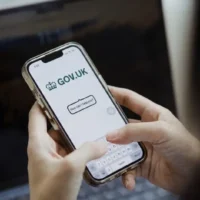


GOV.UK Chat is the Government’s AI-powered assistant for finding official guidance, but it cannot replace professional tax advice. Understanding HMRC AI chatbot tax rules matters because taxpayers remain responsible for the accuracy of their returns.
The chatbot can answer common questions about UK taxes and direct users to relevant GOV.UK pages. However, its responses can be incomplete or incorrect, even when they sound convincing.
For sole traders and company directors, relying on the wrong answer could mean an incorrect tax return. HMRC still expects taxpayers to check their figures and follow the applicable rules.
Key Takeaways
- GOV.UK Chat provides AI-generated answers based on published government guidance.
- Accuracy: Government testing reported 90% accuracy across all topics, not specifically tax questions.
- Taxpayer responsibility: You remain responsible for your tax return, even if an AI chatbot gives incorrect information.
- HMRC guidance: Software developers must prioritise reliable sources and human oversight when using AI.
- Professional advice: Complex tax decisions still require careful assessment of individual circumstances.
Table of Contents
ToggleWhat Is GOV.UK Chat?
GOV.UK Chat is a free AI-powered assistant developed by the Government Digital Service. It helps people find government information without searching through multiple pages.
The service launched publicly in May 2026, following earlier testing. It is available through the GOV.UK app on compatible Apple and Android devices. Users sign in through GOV.UK One Login, which differs from the traditional Government Gateway account.
Unlike general AI tools, GOV.UK Chat generates answers using information from published GOV.UK guidance. It also provides links to relevant government pages so users can check the original information.
For example, a sole trader might ask whether business travel costs qualify for tax relief. The chatbot could summarise relevant guidance and direct them to HMRC’s expense rules. However, it does not examine their transactions or determine whether every journey qualifies.
According to the Government Digital Service’s GOV.UK Chat testing report, the service aims to simplify access to government information.
What Can GOV.UK Chat Actually Do?
GOV.UK Chat can explain published guidance and help users find relevant government information. It is particularly useful for straightforward questions where the answer follows established rules.
For example, users might ask about Self Assessment registration or allowable expenses. The chatbot can explain general procedures and provide links to the relevant GOV.UK pages.
However, GOV.UK Chat has important limitations. It cannot provide personalised financial or legal advice. It also cannot calculate your complete tax position using confidential HMRC account information.
The service does not systematically consult HMRC’s specialist internal manuals or examine all relevant case law. It relies on the government guidance available to its system.
Most importantly, GOV.UK Chat cannot submit tax returns or represent taxpayers before HMRC.
A company director considering a salary and dividend arrangement needs more than a general explanation. The correct approach depends on their financial circumstances and applicable legislation. That requires individual assessment rather than a chatbot response.
How Accurate Is HMRC’s AI Chatbot?
Government testing reported 90% accuracy for GOV.UK Chat across all topics in March 2026.
The Government Digital Service reported an improvement from its earlier 76% benchmark. Its evaluation combined automated assessments with expert reviews.
However, the 90% figure does not mean every tax answer has a 90% chance of being correct. The evaluation covered multiple government services. Some answers failed because they omitted important information rather than providing entirely incorrect explanations.
For tax purposes, even a small omission can create significant problems.
The Low Incomes Tax Reform Group (LITRG) independently tested GOV.UK Chat in May 2026.
One test asked whether gifting a house to a sister would create Capital Gains Tax. The chatbot incorrectly suggested that no CGT would arise. It overlooked the general market-value disposal rules for gifts.
In practice, gifting property can trigger CGT, even without receiving payment. LITRG also identified answers that missed important details about other taxable income.
These findings show why HMRC chatbot accuracy matters beyond headline testing results. A confident answer is not necessarily a complete answer.
Who Is Responsible If the Chatbot Gets It Wrong?
The taxpayer remains responsible for submitting an accurate tax return, even when an AI chatbot provides incorrect information.
This is the most important point for anyone using AI tax guidance. The GOV.UK app terms and conditions explicitly require users to verify chatbot responses before relying on them.
The Government also explains that chatbot responses do not constitute professional advice. HMRC expects taxpayers to establish the relevant facts and apply the correct tax treatment.
For example, imagine a landlord incorrectly claiming private expenditure as a rental business expense. If the landlord relies solely on AI guidance, HMRC can still challenge the deduction.
The taxpayer may need to correct the return and pay additional tax. Interest may also arise. Penalties depend on the circumstances, including whether the taxpayer took reasonable care.
Using AI does not automatically remove liability or guarantee protection against penalties. HMRC explains these responsibilities in its guidance on filing correct and complete tax returns.
HMRC’s Rules for AI in Tax Software
In January 2026, HMRC published guidance explaining its expectations for developers using generative AI in tax software. The guidance applies to commercial products that help taxpayers prepare returns or provide information to HMRC.
However, this does not mean HMRC approves every product containing AI.
Reliable Information and Clear Explanations
HMRC expects AI-supported tax software to use reliable information consistent with legislation. Developers should consider official guidance and relevant case law. They should also keep information updated when tax rules change.
Software should help users identify the sources behind its answers. This matters because tax calculations must follow the correct legislation rather than unexplained assumptions.
Human Oversight Remains Essential
HMRC expects AI software to support human judgement rather than replace it. Where rules are complex, software should alert users and recommend further investigation.
It should also encourage professional advice when necessary. Users must remain able to review AI-generated information and correct errors.
Data Security and Accountability
Tax software can handle sensitive financial information, so HMRC expects developers to maintain appropriate security controls. Its guidance also requires transparency about AI limitations and the protection of personal data.
These requirements reflect HMRC’s approach to AI and HMRC compliance.
Source: HMRC Guidelines for Using Generative AI in Tax Software, published 28 January 2026.
Can You Use ChatGPT for Your Tax Return?
ChatGPT and other general AI tools can help explain tax concepts. However, they are not substitutes for appropriate tax filing software.
ChatGPT is not HMRC-recognised tax filing software. A standard ChatGPT conversation cannot submit a Self Assessment or Corporation Tax return directly to HMRC. It also cannot act as your authorised tax agent.
AI tools may generate outdated information or misunderstand UK-specific tax rules. For example, a response might apply an allowance from the wrong tax year. It could also overlook rules affecting directors or landlords.
These risks become especially important when calculating taxable profits or claiming reliefs.
Self Assessment and AI
AI can help organise expense categories or explain terminology. However, taxpayers must verify every figure before submission.
Our Self Assessment tax returns service helps individuals review income sources and prepare accurate returns.
For taxpayers using Making Tax Digital, compatible software remains essential. HMRC requires relevant taxpayers to use software that supports its digital reporting requirements.
Our Making Tax Digital support can help businesses understand these obligations.
Practical Guidance on Using Tax Chatbots Safely
The safest approach is to treat chatbot answers as research assistance, not final tax advice. Start with a specific question and identify the relevant tax year.
For example, ask about business expenses for 2025/26 rather than simply asking which expenses qualify.
Next, open the GOV.UK guidance linked in the chatbot’s response. Read the eligibility conditions rather than relying on the summary. Check whether the guidance applies to your actual circumstances.
For example, a construction subcontractor might ask whether CIS deductions are business expenses. A chatbot could confuse CIS tax deductions with ordinary operating costs.
In practice, CIS suffered generally represents tax deducted from subcontractor payments, not an additional business expense. Correct bookkeeping must distinguish these amounts.
Our bookkeeping services help businesses maintain records that support accurate tax calculations.
Avoid entering unnecessary personal or confidential financial information into chatbot conversations. Also, keep copies of important guidance and calculations. These records can help explain how you reached a tax decision.
Common Mistakes People Make With Tax Chatbots
AI tools can make routine research easier, but careless use creates unnecessary compliance risks.
Treating Summaries as Final Advice
A chatbot may provide a correct general rule without explaining every exception. This can mislead taxpayers whose circumstances require special treatment.
Always review the full guidance before acting.
Assuming AI Knows Your Circumstances
A chatbot does not automatically know your complete financial position. For example, the High Income Child Benefit Charge depends on relevant individual income circumstances.
A response focusing on one salary could overlook other income affecting the calculation.
Ignoring the Relevant Tax Year
UK tax rules can change between tax years. A correct answer for 2024/25 may not apply to 2025/26.
Always confirm the effective date of any allowance or rule.
Confusing AI Research With Filing Software
An AI-generated tax calculation does not amount to a submitted return. Businesses must still use the appropriate HMRC filing service or compatible software.
How Artifin Accountants Can Help
AI can simplify tax research, but accurate tax returns still require professional judgement and reliable financial records.
At Artifin Accountants, we help individuals and businesses review AI-assisted calculations, identify potential errors and meet HMRC requirements. Our Corporation Tax services and tax planning and advice provide support where automated guidance falls short.
If you’re unsure about an AI-generated tax answer or need help with your returns, contact our team for practical guidance.
Your Tax Chatbot Safety Checklist
Before relying on an AI-generated tax answer:
• Identify the tax year: Confirm which accounting period or tax year applies.
• Check official guidance: Open the original GOV.UK page and read the relevant conditions.
• Review your figures: Compare calculations against invoices or financial records.
• Protect sensitive information: Avoid sharing unnecessary personal or business details.
• Use appropriate filing software: Confirm compatibility with HMRC’s reporting requirements.
• Seek professional advice: Get help where tax treatment depends on individual circumstances.
Frequently Asked Question
Is GOV.UK Chat an Official HMRC Chatbot?
Can I Trust GOV.UK Chat for Tax Advice?
How Accurate Is the HMRC AI Chatbot?
Who Pays If an AI Chatbot Gives Incorrect Tax Advice?
Can ChatGPT Submit My Self Assessment Tax Return?
Does HMRC Approve AI Tax Software?
Can I Use AI for VAT and Corporation Tax Calculations?
When Should I Ask an Accountant Instead of AI?
Unsure If AI Got Your Tax Right?
Get professional guidance before submitting your tax return to HMRC.