

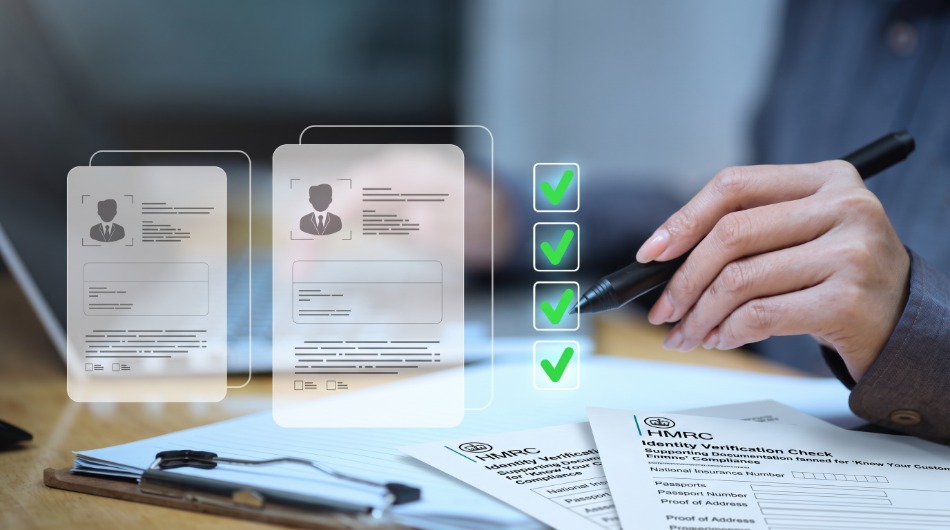
Your company details may look correct on the Companies House register, but a major change is coming that could affect how you manage your business.
For years, setting up and maintaining a UK company required directors to provide basic information without having to prove their identity through a formal verification process. That is changing.
Under the new reforms, directors and other individuals connected with companies will need to complete Companies House Identity Verification before carrying out certain company activities.
For many business owners, the challenge is not understanding that the rule exists. It is knowing when it applies, what the process involves, and whether completing it directly or through an authorised professional adviser is the better option.
Key Takeaways
- Companies House Identity Verification is being introduced under the Economic Crime and Corporate Transparency Act 2023.
- Directors, PSCs and other relevant individuals will need to verify their identity.
- Identity verification can be completed directly with Companies House or through an Authorised Corporate Service Provider (ACSP).
- Accountants and other regulated professionals can act as ACSPs if authorised by Companies House.
Why Is Companies House Introducing Identity Verification?
Companies House maintains the official register of UK companies. This information is used by businesses, lenders, investors and government bodies when assessing companies.
Historically, individuals could become directors or register company information without completing a formal identity check. The new identity verification rules aim to strengthen confidence in the register by confirming that individuals are genuine.
The reforms form part of the Economic Crime and Corporate Transparency Act 2023, which gives Companies House additional powers to improve transparency and prevent misuse of companies.
The purpose is not to create unnecessary administration for genuine businesses. Instead, the aim is to reduce fraudulent registrations and make company information more reliable.
(Source: Identity verification for Companies House)
Who Needs Identity Verification?
The requirement applies to individuals connected with UK companies, including:
• Directors.
• People with significant control (PSCs).
• Individuals acting on behalf of companies.
• Authorised Corporate Service Providers carrying out verification services.
Companies House states that identity verification will become a legal requirement for individuals setting up, running, owning or controlling companies in the UK.
This means directors should understand how the process works and consider how they want to complete their verification.
What Is an Authorised Corporate Service Provider (ACSP)?
An Authorised Corporate Service Provider (ACSP) is a professional adviser authorised by Companies House to carry out certain company-related services, including identity verification.
ACSPs can include accountants, solicitors and company formation agents that meet the required conditions. They must be registered and supervised under the relevant anti-money laundering regulations.
For directors, using an ACSP can provide a more convenient route because the verification process can be handled alongside other company compliance responsibilities.
For example, many directors already work with professional advisers for annual accounts, company filings or company administration. Managing identity verification through the same adviser can make the process easier to coordinate.
How Can Directors Complete Identity Verification?
Directors generally have two options.
Option 1: Verify Directly Through Companies House
Individuals can complete identity verification directly through the Companies House process. This requires the individual to complete the identity check themselves and provide the required information and documents.
This option may work well for directors who prefer to manage the process independently. However, directors should ensure that their personal details match the information held by Companies House to avoid unnecessary delays.
Companies House provides official guidance on the identity verification process and requirements.
(Source: Guidance – Verify your identity for Companies House)
Option 2: Verify Through an ACSP
Many directors may prefer to use an Authorised Corporate Service Provider.
An ACSP can verify a director’s identity on their behalf. The director still needs to provide suitable identification documents, but the verification process is managed through an authorised professional.
This route can be particularly useful for directors who already work with an accountant because identity verification can be managed alongside other compliance responsibilities.
For example, your accountant may already assist with:
• Annual accounts.
• Confirmation statements.
• Corporation Tax filings.
• Registered office requirements.
Adding identity verification into the same compliance process can make administration easier.
(Source: Guidance – Verify your identity for Companies House)
Why Use an Accountant for Companies House Identity Verification?
Many directors already rely on accountants for important company responsibilities. Using an accountant who is authorised as an ACSP can provide continuity and reduce compliance uncertainty. An accountant understands that identity verification is only one part of maintaining a compliant company.
They can also help review whether:
• Director details are accurate.
• PSC information is correct.
• Filing deadlines are being monitored.
• Company records are up to date.
Using an ACSP can be useful because the adviser already understands the company structure and the responsibilities that come with maintaining accurate records.
For example, a director who already receives support with statutory accounts or company formation services may prefer to manage identity verification alongside those existing compliance activities.
When Should Directors Complete Identity Verification?
Companies House is introducing identity verification gradually rather than requiring every individual to complete the process at the same time.
The timing depends on the person’s role and circumstances. Directors and PSCs should monitor official Companies House updates and complete verification when required.
Companies House has confirmed that identity verification will be introduced as part of a wider rollout of reforms affecting people who set up, manage, own or control companies.
Preparing early can help avoid problems when future filings are due.
What Happens If Identity Verification Is Not Completed?
Identity verification will become a legal requirement for relevant individuals. Failing to complete required verification may affect a person’s ability to complete certain Companies House activities and could result in compliance issues.
The exact consequences depend on the individual’s role and circumstances.
Directors should treat identity verification in the same way as other company responsibilities, such as filing accounts and maintaining accurate company information.
How Identity Verification Fits Into Wider Company Compliance
Identity verification does not replace existing company responsibilities. It adds another layer to the information directors need to maintain.
A company’s compliance process should already include checking that:
• Accounts are prepared and filed correctly.
• Confirmation statements are submitted on time.
• Director information is accurate.
• PSC details are updated when required.
• Registered office information remains correct.
Companies that are reviewing their compliance processes may also wish to review their registered office address service arrangements to ensure their public company information remains appropriate.
Common Mistakes Directors Should Avoid
Although the new requirement is designed to strengthen the Companies House register, directors can still face problems if they do not prepare properly.
Leaving It Until the Filing Deadline
Many directors only review compliance requirements when a filing deadline approaches. Completing identity verification early can reduce the risk of delays.
Assuming Someone Else Can Complete It
Identity verification is linked to the individual director or PSC. An adviser can support the process, but the individual must provide their own identity information.
Ignoring Company Records
Identity verification works alongside accurate company information. Directors should ensure that Companies House records, including names, addresses and PSC details, are correct.
Choosing an Adviser Without Checking Authorisation
If using an ACSP, directors should confirm that the provider is authorised by Companies House. Companies House maintains a list of registered ACSPs and advises individuals to review the services offered and experience of any provider they choose. (GOV.UK)
How Professional Support Can Help
For many directors, identity verification will sit alongside other company administration responsibilities.
An accountant or professional adviser can help ensure that identity verification forms part of a wider compliance process rather than becoming a separate task to manage.
This can be particularly useful for businesses already receiving support with accounts, tax filings and company administration.
Alongside identity verification, directors may need to review areas such as Corporation Tax returns and ongoing statutory obligations to ensure company records remain accurate.
Preparing for Companies House Identity Verification
Companies House Identity Verification represents a significant change in how company information is managed in the UK.
The requirement is designed to improve confidence in the Companies House register by ensuring that directors and other individuals connected with companies are verified.
Directors can complete the process directly through Companies House or consider using an Authorised Corporate Service Provider where professional support is preferred.
Preparing early and keeping company records accurate will help businesses adapt to the new requirements with fewer disruptions.
Frequently Asked Question
When does Companies House Identity Verification become mandatory?
Can I use my accountant for Companies House Identity Verification?
What happens if Companies House Identity Verification fails?
Do existing company directors need to complete identity verification?
What is the difference between Companies House Identity Verification and an ACSP?
Make your Identity Verification? process simple
Our team can guide directors and PSCs through the Companies House verification requirements.