
Your first payslip from a new job should be something to look forward to, but what happens when the amount hitting your bank account is much lower than expected?
Many employees assume the problem is a payroll mistake or that their salary has been calculated incorrectly. However, the reason could be hidden in a small detail on your payslip: your tax code.
An emergency tax code can be applied by HMRC when it does not have enough information about your income or employment situation. While it is designed as a temporary measure, it can sometimes lead to more PAYE tax being deducted than necessary until your records are corrected.
If you have recently changed jobs, started receiving benefits, or noticed an unexpected drop in your take-home pay, checking your tax code could help you understand whether you are paying the right amount of tax.
Key Takeaways
- This temporary tax code is normally used when HMRC lacks complete information about your income.
- Starting a new job without a P45 is one of the most common reasons for an emergency tax code.
- Tax codes ending in W1, M1, or X often indicate a non-cumulative emergency basis.
- Updating HMRC with accurate employment and income details can help correct your tax deductions.
What Is an Emergency Tax Code?
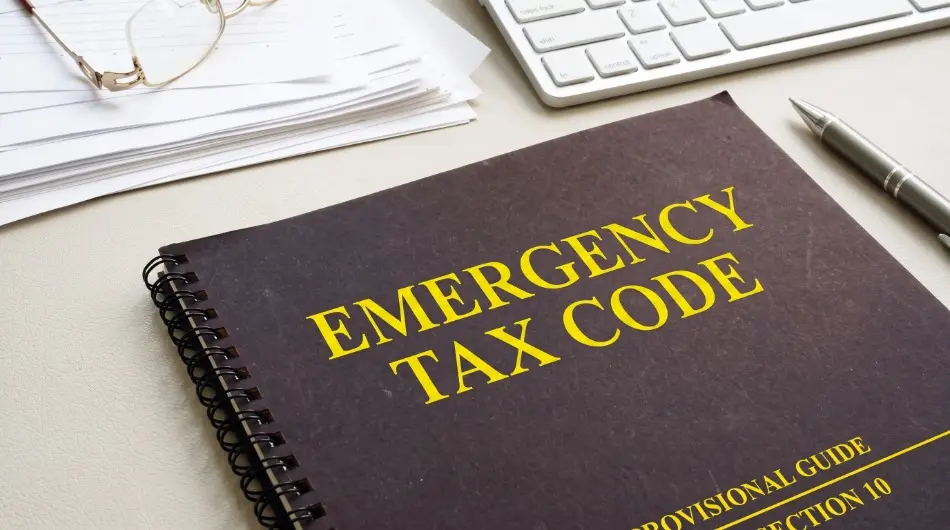
An emergency tax code is a temporary PAYE tax code used by HMRC when it needs to estimate how much tax should be deducted from your earnings.
Your employer uses your tax code to calculate how much income tax to deduct from your salary before paying you. The code tells your payroll system how much tax-free income you are entitled to receive during the tax year.
For the 2026/27 tax year, the standard Personal Allowance is £12,570 for most individuals. HMRC uses your tax code to reflect this allowance and any adjustments, such as taxable benefits, pension income, or previous underpayments.
Why HMRC Changes Your Tax Code?
HMRC needs accurate information about your income to calculate PAYE correctly. When information is missing or outdated, it may use an emergency tax code until your records are updated.
Starting a New Job Without a P45
A P45 provides important details from your previous employer, including your earnings and tax paid during the tax year.
If you start a new job without a P45, your employer may ask you to complete a starter checklist. HMRC then uses the information provided to determine your initial tax code.
If HMRC cannot confirm your position, it may place you on an emergency tax code.
Changing Employers
When you move jobs, your previous employment details should normally transfer through HMRC systems.
However, delays or incorrect information can sometimes cause HMRC to issue a temporary tax code. This may happen if your previous employment has not been closed correctly or your new employment details have not been matched.
Receiving Company Benefits or Additional Income
Tax codes can change when you receive benefits such as:
• Company cars.
• Private medical insurance.
• Additional employment benefits.
• Pension income.
• Rental or investment income.
HMRC may adjust your tax code to collect the additional tax due on these sources.
Incorrect Details Held by HMRC
Your tax code depends on information held by HMRC. If your circumstances change but HMRC is not informed, your tax code may not reflect your actual position.
Examples include:
• A benefit ending but remaining included in your tax code.
• A second job starting or ending.
• A change in pension income.
• Incorrect employment details.
(Source: HMRC guidance for employers on PAYE starter information)
Could Your Tax Code Be Reducing Your Take-Home Pay?
Being placed on a temporary code does not automatically mean you have paid too much tax. However, it can create incorrect deductions if HMRC’s temporary calculation does not match your circumstances.
The main issue is that emergency tax codes are often applied on a non-cumulative basis. This means HMRC calculates tax based only on your current pay period rather than reviewing your full income position from the start of the tax year.
For example, imagine you start a new job in September, and your employer does not receive your previous employment information. HMRC may temporarily assume that you have already used part of your tax-free allowance.
This could result in more Income Tax being deducted from your salary than necessary.
You may notice this through:
• A lower-than-expected first payslip.
• A sudden increase in PAYE deductions.
• A tax code that does not match your circumstances.
• Different tax deductions compared with previous months.
If your PAYE deductions look unusual, checking your records early can prevent unnecessary tax payments.
(Source: HMRC explanation of PAYE tax codes)
Check Your Expected Take-Home Pay
If your payslip looks lower than expected, it can help to compare your gross salary with your estimated take-home pay. Our UK take home pay calculator can help you understand how Income Tax, National Insurance, and other deductions may affect your monthly income.
This can be useful when checking whether your PAYE deductions appear reasonable, especially after starting a new job, changing your salary, or receiving a new tax code.
How to Check Your Tax Code on Your Payslip
Your tax code usually appears on your payslip. You can also check your current tax code through your HMRC Personal Tax Account.
Common emergency tax code indicators include:
• 1257L W1
• 1257L M1
• 1257L X
The standard 1257L code reflects the basic Personal Allowance for many employees. The W1, M1, and X suffixes indicate that the tax code is being operated on a week-one or month-one basis.
This means payroll calculates your tax using only the current pay period rather than your cumulative earnings for the tax year.
A tax code ending in W1, M1, or X does not always mean you have paid too much tax. However, it is worth checking whether HMRC has the correct information.
(Source: HMRC tax code guidance)
What Should You Do If You Are on an Emergency Tax Code?
If you believe HMRC has applied an incorrect tax code, you should review your PAYE information and update any missing details.
Step 1: Check Your Tax Code
Review your payslip and compare the tax code with your current circumstances.
Consider:
• Is this your only job?
• Have you recently changed employers?
• Are your benefits correctly shown?
• Have you recently stopped another source of income?
Step 2: Update HMRC Information
You can update HMRC through your Personal Tax Account.
You may need to confirm:
• Your employment details.
• Your employer information.
• Any benefits received.
• Additional income sources.
Keeping HMRC updated helps ensure your tax code reflects your actual position.
Step 3: Provide Information to Your Employer
If you recently started work, provide your employer with relevant documents, including:
• P45 from your previous employer.
• Starter checklist information.
• Details of previous employment if requested.
Your employer reports payroll information to HMRC through Real Time Information (RTI), which helps HMRC maintain accurate records.
Step 4: Review Previous Payslips
If your tax code has been incorrect for several months, check previous payslips to identify whether excess tax has been deducted.
Keep records of:
• Payslips.
• P45 documents.
• P60 certificates.
• HMRC correspondence.
These documents help when reviewing a possible tax refund.
Could Your Tax Code Be Costing You More?
Check your PAYE position and find out if your tax deductions are correct.
Call us: +44 (0) 207 093 2544
How to Recover Overpaid PAYE Tax
If you have paid too much tax because of an emergency tax code, HMRC may correct the position automatically.
In some cases, your employer will refund the excess tax through your payroll once HMRC updates your tax code.
For example, if HMRC changes your tax code during the tax year and you have already paid too much tax, your payroll system may adjust future deductions.
If the issue is not corrected through payroll, you may need to contact HMRC after the end of the tax year.
You should keep supporting documents, including:
• P60.
• Payslips.
• P45.
• Details of previous employment.
These records help HMRC confirm whether you have overpaid PAYE tax.
(Source: PAYE and payroll for employers)
Common Mistakes With Emergency Tax Codes
Many people ignore their tax code because they assume payroll has calculated everything correctly. However, your employer applies the tax code provided by HMRC. They do not decide whether your tax code is correct.
Common mistakes include:
• Ignoring an unexpected change in PAYE deductions.
• Assuming a lower payslip is caused by payroll errors.
• Not updating HMRC after changing jobs.
• Waiting until the end of the tax year to review deductions.
• Failing to check your HMRC Personal Tax Account.
A quick review when your circumstances change can often prevent larger corrections later.
When Professional Tax Advice Can Help
Most employees can resolve simple tax code issues directly with HMRC. However, professional advice can help where the situation involves multiple income sources, company benefits, director income, or previous tax issues.
An accountant can help by:
• Reviewing your PAYE records.
• Checking whether deductions appear correct.
• Identifying possible overpaid tax.
• Explaining HMRC correspondence.
• Supporting tax refund claims.
For directors and business owners, PAYE issues can sometimes connect with wider tax planning, payroll, and company reporting responsibilities.
Don’t Ignore an Incorrect Tax Code
An emergency tax code is often temporary, but it should not be ignored. If HMRC does not have the correct information, you could continue paying more PAYE tax than required.
Checking your tax code after changing jobs, receiving benefits, or starting a new income source can help ensure your deductions are correct.
If you are unsure whether your tax code is right or think you may have overpaid tax, Artifin Accountants can help review your PAYE position and guide you through the next steps.