

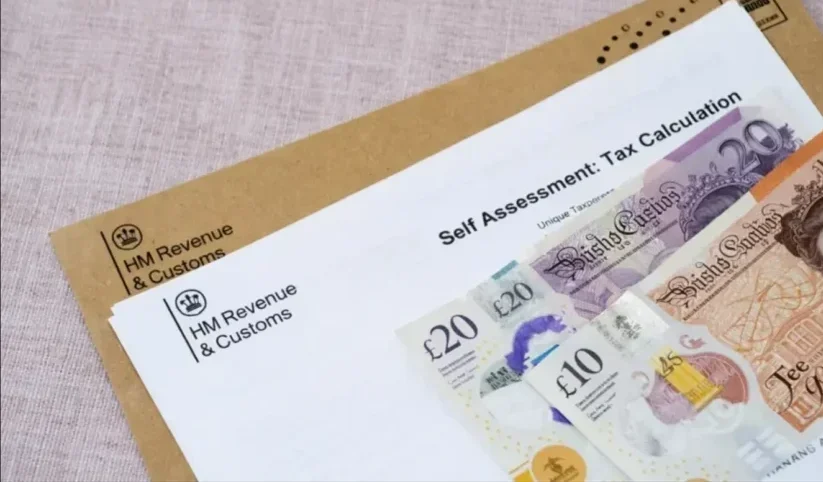
Managing Self-Assessment with multiple income sources can be challenging, particularly if the income is derived from a combination of employment, self-employment, real estate, investments, or earnings from abroad. Although this scenario is becoming more prevalent in the UK, it also raises the possibility of errors if income is not properly organised and reported.
According to research on self-assessment tax systems, the main cause of errors when taxpayers manage multiple income streams is complexity rather than intentional non-compliance. It explains how responsibility in self-assessment systems shifts heavily onto the taxpayer. (Self-Assessment for Income Tax by James, 2022).
This guide uses HMRC guidelines to help you stay compliant by providing a clear and practical explanation of how to manage Self-Assessment with multiple income sources.
Self-Assessment is the system HM Revenue & Customs (HMRC) uses to collect income tax that is not fully deducted through PAYE. It is your responsibility to declare any income you receive from sources other than regular employment and to determine the amount of tax that is owed.
When you have complex earnings structures or untaxed income, HMRC requires a tax return. Instead of assessing each source of income independently, the UK system aggregates all taxable income into a single computation.
Research on tax enforcement and compliance demonstrates that accurate reporting, especially in self-assessment systems, depends on knowledge of obligations (Alm & McClellan, 2019).
When dealing with Self-Assessment with multiple income sources, the risk of error rises significantly. Academic research demonstrates that taxpayers with fragmented income structures are more likely to misreport due to record-keeping challenges and classification errors rather than intentional avoidance (Alm & McClellan, 2019).
Even though income from investments, side jobs, and rental properties can impact tax bands, allowances, and overall liability, it is frequently undervalued. For this reason, complete disclosure and precise classification are highly valued by HMRC.
List all of the sources of income you received during the tax year before filing your Self-Assessment return.
Salary, bonuses, and benefits must be included even if tax was already deducted through PAYE.
Profits from contracts, freelancing, and businesses must be reported separately. Self-Assessment for Income Tax discusses the fact that self-employment income is one of the most frequently misreported categories because of inconsistent records. (James, 2022).
Rental income must be declared along with allowable expenses such as maintenance and mortgage interest.
Even when tax is subtracted at the source, interest and dividends are still subject to taxation.
Residents of the UK are required to report their global income. Foreign income is often left out because reporting regulations are unclear (James, 2022). HMRC explains how to report overseas income and claim relief where applicable.
Royalties, irregular earnings, and casual labour are all considered “other taxable income”. HMRC guidance is available via the HS325 helpsheet.
The best indicator of accurate Self-Assessment filing is record-keeping. Taxpayers who keep organized records are much less likely to be subject to fines or enquiries (WHAT MOTIVATES TAX COMPLIANCE? Alm, J. 2019).
You should retain:
• Payslips and P60s
• Invoices and receipts
• Rental statements
• Bank interest certificates
• Dividend vouchers
• Foreign income documentation
HMRC requires records to be kept for at least five years after the submission deadline.
Clear guidance for every income source.
When managing Self-Assessment with multiple income sources, using the correct supplementary pages is essential:
According to research on how audit rates affect compliance, one of the most frequent causes of corrections or audits for taxpayers is income misclassification (Dubin, Graetz & Wilde, 2018).
Allowances can drastically lower your tax liability, but they must be properly applied to all income levels. These may include:
• Personal allowance
• Trading allowance
• Allowable business expenses
• Property expense deductions
Research on self-assessment systems reveals that misinterpretation of reliefs frequently results in overpayment, particularly for taxpayers with multiple sources of income (James, 2022).
Handling Self-Assessment with multiple income sources can quickly become messy if small details are missed. Many tax problems result from assumptions and inadequate record-keeping rather than intentional mistakes. Below are some of the most common mistakes taxpayers make and how to avoid them.
The assumption that HMRC is already aware of every source of income is one of the biggest errors. Employers, banks, and pension providers may provide HMRC with information, but this information is not always accurate or comprehensive. Your Self-Assessment tax return still needs to include any income from side gigs, dividends, rental properties, freelance work, and foreign sources. Ignoring even a tiny source of income can result in fines and interest down the road.
Confusion frequently results from using the same bank account for both personal expenses and earnings from self-employment. Combining income and expenses makes it more difficult to defend permitted spending or provide an explanation of numbers if HMRC raises concerns. Maintaining a distinct business account lowers the possibility of mistakes when completing your UK Self-Assessment and helps in keeping clean records.
Many taxpayers either underreport or overreport their expenses. Claiming personal costs as business expenses can result in compliance issues, while failing to claim legitimate allowable expenses means paying more tax than necessary. The only expenses that should be included are those that are used solely for business purposes. This is particularly crucial if you earn money from both employment and self-employment.
Account payments frequently take people by surprise. HMRC may request advance payments for the following tax year if your tax bill exceeds the threshold. Failing to plan for these payments can create cash flow pressure. This is a typical problem for people who begin earning money from several sources and are unfamiliar with the Self-Assessment process.
Late submission or late payment is one of the easiest ways to face penalties. In the UK, there is a strict deadline for self-assessment, and even if there is no tax due, there are penalties. Relying on memory rather than reminders or professional support increases the risk of missing key dates, especially when managing more than one income stream.
Another widespread misperception is that HMRC’s records are always correct. Inaccurate employer submissions or out-of-date data can lead to errors. To prevent paying the incorrect amount of tax, it is crucial to check your tax code and income information before filing your return.
If HMRC requests proof, incomplete or missing records make it challenging to demonstrate income and expenses. HMRC can request records going back several years. Maintaining digital copies of invoices, bank statements, and expense receipts facilitates future Self-Assessment filings and protects you in the event of an inquiry.
Many people focus only on filing their Self-Assessment tax return and overlook tax planning. Failing to use available allowances, reliefs, or timing income correctly can increase your tax bill unnecessarily. When dealing with dividend income, rental income, or freelance earnings in addition to employment income, this is especially typical.
Deadlines are more important than most people realise when it comes to self-assessment with multiple income sources. HMRC penalties are automatic, and they apply even when mistakes are unintentional.
The most crucial deadline is January 31st, which comes after the tax year ends. By this date, you must:
• Submit your online Self-Assessment tax return
• Pay any tax owed for the year
• Pay the first payment on account if HMRC requires one
HMRC explains these timelines clearly in its official guidance on Self-Assessment deadlines. Missing this date is one of the most common reasons people face penalties.
HMRC applies penalties in stages, and they increase the longer the delay continues:
• An automatic £100 penalty applies the day after the deadline
• After three months, additional daily penalties of £10 per day, up to a maximum of £900
• After 6 months, a further penalty of 5% of the tax due or £300, whichever is greater
• Further penalties may be charged at six and twelve months, depending on the circumstances
(Source: Self-Assessment penalties GOV.UK)

Financial Forecasts To take important business decisions it is...

UK Budget 2025: What’s New and What It Means...

Companies House Announced Penalties for Non-Compliance Companies House has...

Step-by-Step Guide to Submit the CT600 Corporation Tax Return...
Ready to reach out to us! Request a call back now for a personalized quote!


You can talk to us on WhatsApp