

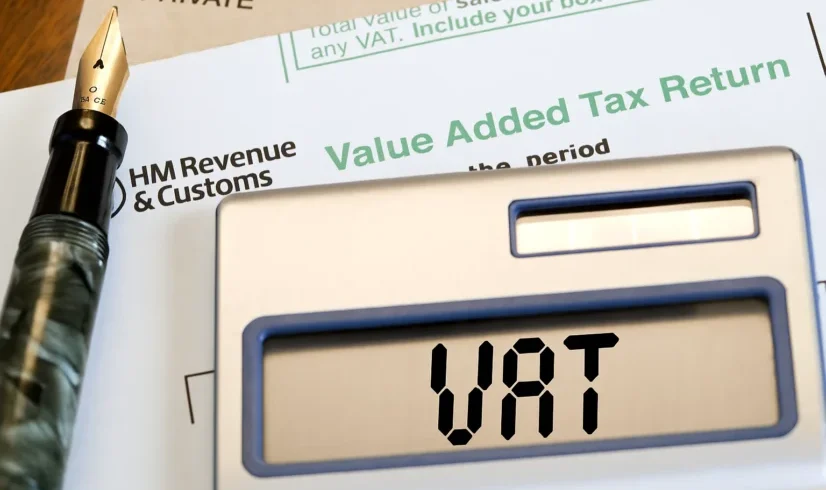
If you’ve ever looked at a receipt and noticed “VAT” added to your total, you’ve already come across Value Added Tax. But what exactly is VAT, how does it work, and why is it such a big deal for businesses? Let’s break it down.
As your business expands in the UK, you’ll probably have to deal with VAT (Value Added Tax). It’s a tax that’s added to most goods and services. If your business gets big enough, you have to register it.
For the 2024/25 tax year, if your VAT-taxable turnover is more than £90,000 in a 12-month period, you need to register with HMRC. Even if you don’t hit that amount, you can still register if you want to get VAT back on what you buy or if you want to make your business look more professional.
VAT, which stands for Value Added Tax, is a tax on most things you buy in the UK. Unlike a typical sales tax, VAT is applied at each point in the supply chain. VAT gets added when a company sells to another company, then again when that company sells it to a store, and one more time when you, the customer, buy it.
Businesses collect VAT on their sales and get back the VAT they paid on their purchases. This way, tax is only paid on the extra value added at each step of making or selling something. To manage this efficiently, many companies use professional bookkeeping services that help maintain accurate VAT records and prepare for returns.
The end customer is the one who pays the VAT, since they can’t reclaim it. Businesses are acting as collectors, gathering VAT and sending it to HMRC.
VAT is a tax on goods that applies at each step of the production process, from raw materials to the final product you purchase.
Here’s how it works: each business in the supply chain collects VAT on its sales, gets a refund on the VAT it pays for its purchases, and then pays the difference to the HMRC. This way, the government gets tax revenue at each step, with the final consumer carrying the full VAT cost.
Let’s look at an example of a 20% VAT rate.
• A manufacturer spends £100 to create a batch of products, covering materials, labor, and other costs.
• They then add 20% VAT. So, the original £100 price gets a £20 VAT charge, bringing the total to £120.
• The manufacturer keeps £100 and pays the £20 VAT to the HMRC.
• A wholesaler sells goods to a retailer for £200, plus VAT.
• That’s £200 before VAT, and £40 VAT (at 20% of £200), bringing the total to £240.
• The wholesaler already paid £20 VAT to the manufacturer, so they only need to pay £20 VAT (£40 – £20) to HMRC.
• The shop sells an item to a customer for £300, and VAT is added on top of that.
• Before VAT, the price is £300. The VAT is 20% of £300, which is £60. So, the total cost is £360.
• The shop already paid £40 in VAT to the wholesaler. This means they need to pay £20 more in VAT (£60 – £40) to HMRC.
• The manufacturer pays £20 VAT.
• Wholesaler pays £20 VAT.
• Retailer pays £20 VAT.
• Together, that equals £60 VAT, which is what the customer ultimately pays in the final price.
VAT is collected bit by bit, but at the end of the day, it’s the customer who pays the whole thing because they can’t get that money back. Each business just passes it along, adding VAT and then getting that VAT back as things go from one place to another.
The VAT system aims for fairness and clarity. It taxes the value that each business adds, rather than the total product price at each step. So, manufacturers, suppliers, and retailers only pay VAT on their part of the final price.
This setup stops double taxation, so people don’t pay tax on money that’s already been taxed. Because sales are recorded with invoices and receipts, the system boosts openness and responsibility. These records also make it easier to prepare statutory accounts and ensure accurate year-end reports.
In the UK, VAT is applied at three main rates, depending on the kind of goods and services. For accurate VAT returns, invoicing, and general compliance with HMRC regulations, you must know which rate applies to your company.
The majority of goods and services sold in the UK are subject to the standard rate of VAT, including apparel, electronics, furniture, digital goods, and professional services. Businesses that are registered for VAT are required to charge 20% VAT on taxable sales and are eligible to claim VAT on business purchases.
Some essential or socially beneficial products, like children’s car seats, energy-saving materials, and household energy (gas and electricity), are eligible for the reduced rate. This rate is intended to lower the cost of common and eco-friendly products.
Since Zero-rated items are taxed at 0%, VAT is deducted at 0% but can still be recovered on related expenses. Common examples include most food, children’s clothing, books, newspapers, and public transport. These sales must be included on VAT returns even though no VAT is added.
Some products and services, like healthcare, education, and insurance, are completely exempt from VAT, while other products and services, like wages or specific charitable endeavours, are not. On these, VAT cannot be charged or reclaimed.
The official guidelines can be used to determine precisely which items fall under each category to compute VAT.
In the UK, once your business hits a certain income level, VAT registration isn’t a choice. Whether you have a small shop, sell stuff online, or do digital services, you may have to register for VAT with HM Revenue & Customs (HMRC).
You need to register for VAT if your taxable sales go over £90,000 in a 12-month period. This is the VAT registration threshold, and it applies to most businesses. You also must register if you think your sales will exceed £90,000 in the next 30 days. This could happen if you sign a big contract or get a sizable order. After registering, your business needs to charge VAT on sales, send in VAT returns, usually every quarter, and keep good financial records to follow HMRC rules.
But keep in mind, if you do, you’ll have to:
• Add VAT to what you sell.
• Keep careful records and invoices for VAT.
• Send in VAT returns regularly (usually every three months).
So, while there are good things about registering early, make sure your prices and money situation can handle it. According to HMRC data from 2023–2024, roughly 0.9 million businesses voluntarily registered (i.e., fell below the threshold).
Additionally, the annual administrative costs of compliant UK businesses are estimated to be £15.4 billion, including VAT. That includes fees for accountants, software, and internal staff time.
Therefore, even though early registration has advantages, you should make sure your systems and finances can support the additional expense.
If your business is not based in the UK but you sell to UK customers, you may have to register for Value Added Tax. For instance, If you’re an overseas seller who keeps goods in the UK or sells on places like Amazon, you have to register, no matter how much you sell.
Also, if you sell digital services (like apps or online courses), you might need to register under UK VAT rules. EU businesses can also use the One Stop Shop (OSS) system.
Based on tax data from the UK, studies reveal an interesting trend regarding the VAT registration limit. A system known as bunching is used by many small businesses to avoid registering for VAT by keeping their yearly sales slightly below the £90,000 threshold.
However, nearly 50% of businesses that are exempt from registration still choose to do so voluntarily. According to research, businesses that voluntarily register are more likely to:
• Buy a lot of goods or services from other VAT-registered companies
• Don’t have a lot of competition
• Mainly sell to other businesses and not individual customers
In addition to being able to claim VAT on their expenses, these businesses gain from appearing more professional to clients. However, companies whose primary customers are consumers are more likely to maintain their prices below the threshold.
(Source: VAT Notches, Voluntary Registration, and Bunching: Theory and U.K. Evidence, The Review of Economics and Statistics 2021 )
Once your business hits the VAT threshold, or if you just want to register, you’ll need to go through HMRC to get it done. It’s not too hard, but knowing what to do will save you some time and keep you from making errors. Here’s a guide to help you through each step.
First, check if your business needs to register for Value Added Tax. Registration is required if:
• Your taxable sales (total sales that aren’t tax-free) are more than £90,000 in the last year, or
• You think your sales will exceed £90,000 in the next month.
You can also choose to register, even if you don’t meet these requirements. Lots of small businesses do this to get VAT refunds on what they spend or to seem more professional to bigger businesses.
Keep in mind that registering means you have to charge VAT on all your sales and file VAT returns regularly, so be sure it’s a good financial move for your business.
Make sure you have all the necessary information before beginning the registration process. To verify your company’s identity and operations, HMRC requests certain information, such as:
• Name of business, address, and trading name (if any)
• Contact information for the director or owner of the company
• Unique Taxpayer Reference (UTR) number
• Details of the bank account used for VAT refunds and payments
• Description of a business activity (what you sell and how your business runs)
• Date on which you exceeded (or anticipate exceeding) the VAT threshold
• Details of any connected or affiliated companies that you own
Having these on hand will speed up the registration process significantly.
Most businesses in the UK sign up for VAT online through the HMRC website. Here’s how it works:
• Go to the official HMRC website.
• Log in to your Government Gateway account, or create one if you don’t have one.
• Click on “Register for VAT.”
• Fill out the online VAT registration form with all the necessary info.
If your business has a complex structure, like a partnership or is based overseas, you might need to register with a paper form (VAT1). You can find this form on the HMRC website.
Once you apply for VAT, HMRC will check your application and then send you a VAT registration certificate. You should get it in about two weeks, either by mail or in your online account.
This certificate tells you:
• Your VAT registration number (put this on every invoice)
• When your registration starts
•When your first VAT return is due
You can’t charge VAT until you get your number. After you get the number, you have to add VAT to the sales you made from your registration start date.
After you sign up for VAT, remember these things:
• Charge VAT on goods and services that qualify.
• Show VAT as a separate item on your invoices, if it’s not already included in the price.
• Put your VAT number on all official paperwork.
Keep track of the VAT you charge (output VAT) and the VAT you pay on things you buy (input VAT). This will help you figure out how much VAT you need to pay or can get back.
If you’re a registered business, you’ll need to submit VAT returns, usually every three months. You’ll do this online using software that works with Making Tax Digital (MTD), linking directly to HMRC
Your VAT return will show:
• The VAT you’ve charged on your sales (output VAT).
• The VAT you’ve paid on your purchases (input VAT).
• The difference – this is either what you owe HMRC or what you can get back as a refund.
Make sure you file your VAT returns on time to avoid fines or interest.
After you register, you can get VAT refunds on many business-related buys, like office stuff, inventory, or machines.
You might even get VAT back on some things you bought before registering, if:
• They were for your business.
• You still use them for work.
• You have the receipts
Usually, you can claim VAT on items bought up to four years before you registered, and for services, it’s up to six months before.
Accurate pricing and compliance depend on knowing how much VAT to charge or reclaim. Manually calculating VAT can be challenging, particularly when dealing with mixed sales or different rates. Utilizing a VAT calculator can simplify this process.
With a VAT calculator, you can:
• Determine the VAT-exclusive or VAT-inclusive price
• Calculate the VAT amount on purchases or sales
• Plan your cash flow and ensure accurate VAT returns
Using a VAT calculator ensures accuracy and efficiency in your financial planning, helping you stay compliant with HMRC regulations.
Not registering for VAT on time can have a number of negative effects:
• Backdated VAT: You’re responsible for VAT on all sales from when you should have registered, even if you didn’t charge customers VAT at the time.
• Fines and Interest: HMRC will fine you based on how late you register. They also charge interest on any unpaid VAT.
• Invoice Changes: You’ll need to reissue VAT-compliant invoices for past sales. If you can’t bill your customers again for VAT, you might have to pay it yourself.
• Reputation: Registering late suggests you’re not good with compliance, which can hurt your reputation with customers and banks.
• Lower Fines for Voluntary Disclosure: If you tell HMRC about the late registration before they find out, they might reduce your fine.
Complying with VAT regulations is a major challenge for businesses. Research from the British Tax Review (2020) shows UK firms spend considerable time and money meeting VAT requirements.
A study from 2018 to 2019 compared the UK’s VAT system to those in the EU and the Organization for Economic Co-operation and Development (OECD). The UK does well in some areas but is lacking in others. The primary problem isn’t the tax authority’s process; it’s the complexity of the VAT laws.
Brexit gives the UK a chance to simplify its VAT system. Without EU rules, the government could make compliance simpler and cheaper for businesses, which would help them compete as they deal with new expenses after Brexit.
(Source: The VAT Compliance Burden in the UK: A Comparative Assessment, British Tax Review, 2020)
Strategic Capital Gains Tax Reporting & Relief Planning UK...

Companies House to Introduce Mandatory Identity Verification on 18...

Tax Planning & Advice For a business it is...
How to Close a Limited Company in the UK:...
Ready to reach out to us! Request a call back now for a personalized quote!

You can talk to us on WhatsApp