Understanding UK Tax Codes: What They Mean and How They Affect Your Pay
Ever glanced at your payslip and seen a weird mix of letters and numbers called a tax code? It might seem like gibberish, but it really messes with how much tax comes out of your pay. If the code is accurate, you will probably pay the correct amount. If it’s incorrect, you might overspend or receive an unexpected bill. Therefore, understanding your tax code is crucial whether you work as an employee, manage payroll, or simply want to handle your finances well.
What Is a Tax Code?
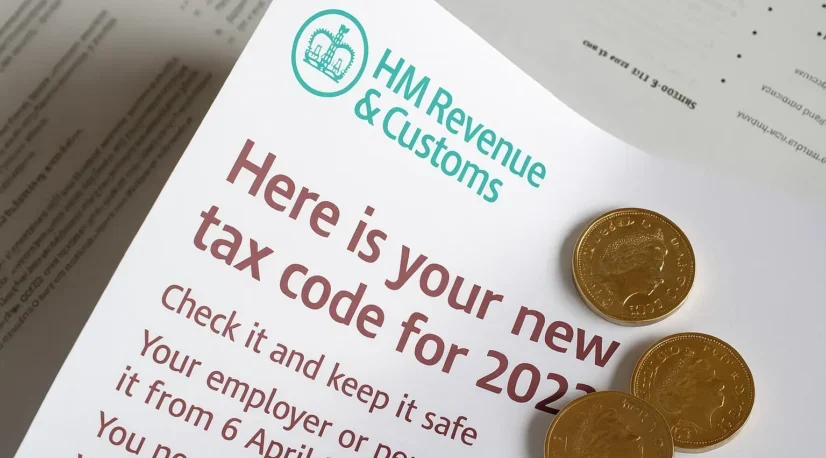
Your employer or pension provider uses a tax code to work out how much income tax to take from your pay or pension. HM Revenue & Customs (HMRC) issues this code for use with the Pay As You Earn (PAYE) system.
Keep in mind that if you work for yourself, you usually won’t get a tax code for your business earnings. Instead, you’ll handle your tax matters through self-assessment.
How Tax Codes Are Made Up
A typical tax code looks something like 1257L (for example). The number indicates to your employer the amount of tax-free income you are permitted to earn during the tax year (in this case, £12,570).
The letter section provides additional details about your unique situation:
• “L” indicates that you are eligible for the standard Personal Allowance.
• “M” or “N” denotes a transfer of Marriage Allowance.
• “0T”, “BR”, “D0”, and so on all have distinct meanings (more codes will be discussed below).
To put it simply, the tax-free allowance is transformed into a code by adding a letter and removing the final zero. For instance, a personal allowance of £12,570 equals “1257” + “L” = 1257L.
Common UK Tax Codes Explained
The following are a few tax codes you may come across, along with their general meanings:
• 1257L: For the 2024–2025 tax year, it is the typical allowance for the majority of individuals with a single job and no special adjustments.
• BR: “Basic Rate” – Since no personal allowance has been applied, all income from that job or pension is taxed at the basic rate of 20%. Often used for a second job or pension.
• D0: The higher tax rate of 40% is applied to all income from that job or pension.
• 0T: Your employer does not have enough information to determine a code, or your personal allowance has been reduced.
• NT: There is no tax to be deducted from those earnings.
• K codes (e.g., K396): These are applicable when the employer deducts additional tax because your untaxed income or benefits usage exceeds your personal allowance.
Emergency Tax Codes and What They Mean
On your payslip, you may occasionally see codes like “W1”, “M1”, “X”, or even “1157L W1”. These are frequently short-term or emergency tax codes.
They are used when you’ve started a new job and haven’t provided all the information required, or when your employer hasn’t yet received the complete information from HMRC. Until the correct code is issued, you may be paying more or less tax while using an emergency code.
How Tax Codes Affect Your Take-Home Pay
Your net pay (the amount you are actually paid) is directly impacted by your tax code since it establishes the portion of your income that is tax-free. You will be taxed on a smaller portion of your income if your allowance is large (as shown by the number part), which will increase your take-home pay. Your net pay will be lower, and more of your income will be taxed if your allowance is minimal or nonexistent (as shown by a K code, 0T, or BR).
For example:
You receive £12,570 tax-free for the year if your code is 1257L (i.e., the first portion of your pay is tax-free). If your code is 0T, you are not eligible for a tax-free allowance, and your earnings are immediately taxed.
Checking your payslip and code is, therefore, worthwhile because an incorrect code could cost you hundreds of dollars over the course of a year.
Why Your Tax Code Might Change
Your tax code may (or should) change for a variety of reasons. Some of the common ones:
• If you take a pension or start a second job, HMRC may divide your personal allowance between them or make other adjustments.
• Benefits that you receive from your employer, such as a company car or private health insurance, are taxable and will lower your allowance.
• HMRC may modify your code if your taxable income fluctuates or if you receive untaxed income (like dividends or interest).
• If you underpaid taxes in a previous year, HMRC may use your tax code to make up the difference. (Usually using a “K” code)
• If you recently started a new job and your P45 or previous employer’s details are missing, HMRC may provide an emergency tax code.
How to Check Your Tax Code
To ensure that you are paying the appropriate amount and that your tax code is correct:
• You can usually find your tax code on your payslip.
• Examine your HMRC coding notice, which is usually sent online or by mail.
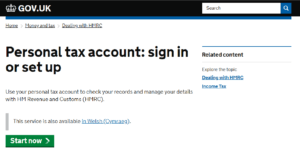
• Log in to your personal tax account on GOV.UK to view your tax code and history.
• If something doesn’t seem right, compare your allowance, benefits, other sources of income, and employment to what your code indicates.